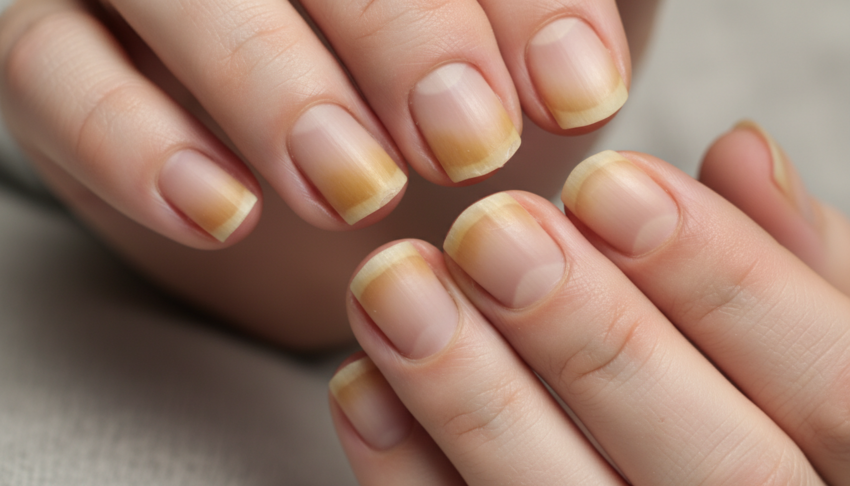
Nail Problems You Shouldn’t Ignore (and What Causes Them)

Many people notice their fingernails or toenails becoming yellow, thick, brittle or flaky long before they realize the cause. These changes often happen slowly, making them easy to ignore. But when nails start looking different, it’s usually your body telling you something is off.
Below are the main reasons your nails might look yellow, thick, brittle, or flaky, and what you can do about it.
Yellowing Nails
Yellowing is often the first visible sign that something is off. One nail may start to develop a light tint that gradually becomes deeper or more noticeable.
Why it happens: A change in color usually means the nail surface has been affected by moisture, buildup, or small organisms. Over time, the nail becomes discolored because the layers are no longer smooth or transparent.
What you can do: Wash your hands and feet regularly, dry them completely, and avoid anything that traps moisture. If yellowing continues or spreads to more nails, it may help to follow a simple nail care routine that keeps the nails clean and protected.
Thick or Raised Nails
Thickened nails are harder to trim, may feel heavy, and can start to lift from the nail bed. This often develops gradually.
Why it happens: The nail begins to grow irregularly when its structure is disturbed. As the nail tries to protect itself, it becomes harder and thicker.
What you can do: Trim gently, wear breathable shoes, and avoid pressure on the nail. If thickening keeps getting worse, you may want to follow a structured care plan. A helpful starting point is the article titled 7-Day Nail Recovery Guide, which walks through daily steps you can take.
Brittle or Crumbling Nails
Some nails break, split, or crumble at the edges. This is usually a sign that the nail has weakened over time.
Why it happens: When the nail is compromised, it loses strength and becomes more fragile. The edges may chip or peel, and the surface can become uneven.
What you can do: Avoid picking or peeling the nail. Keep your nails clean and dry, and trim them carefully so the edges stay smooth. Improving daily nail hygiene can help new growth come in healthier.
Flaking or Peeling Nails
Flaking often appears as tiny layers lifting from the surface of the nail. Although it seems minor, it can be an early warning sign that the nail is becoming damaged.
Why it happens: The outer layers of the nail weaken and begin to separate. If not managed, this can lead to discoloration or thickening later on.
What you can do: Dry your hands and feet thoroughly after bathing, avoid tight shoes, and trim nails regularly to prevent snagging or peeling.
Changes in Nail Shape
When a nail starts curving, ridging, or lifting, it usually means the nail has been affected for a while.
Why it happens: Anything that disrupts healthy nail growth can change the shape over time. These changes usually develop slowly, so people often miss the early signs.
What you can do: Keep an eye on the shape and trim your nails frequently. If you notice ongoing changes, it is worth adjusting your daily care routine to support healthier growth.
Mild Odor or Sensitivity
Some people notice a faint smell or slight tenderness around the nail.
Why it happens: Moisture and debris can collect around or under the nail when its surface is compromised, which can lead to odor or discomfort.
What you can do: Make sure your feet stay dry throughout the day. Change socks often, especially after sweating, and rotate your shoes so they can air out.
Conclusion
Changes like yellowing, thickening, brittleness, or flaking usually start small but tend to worsen over time if ignored. Paying attention early gives you the best chance of maintaining strong, healthy nails. Simple habits like keeping your feet dry, trimming regularly, and supporting the nail with daily care can make a noticeable difference.
For readers who want guidance on creating a steady routine, the 7-Day Nail Recovery Guide is a helpful next step with simple instructions you can begin right away. If you’re dealing with nail fungus, consider Fungix by Approved Science, a gentle, easy to apply formula for fast support.